 A BoatRun Technique Reference
How to read the boat's acceleration curve, what BoatRun's catch metrics actually measure, and how to spot and correct the most common technique errors.
As with all aspects of rowing, there is no single perfect stroke curve, but there are clearly inefficient ones. Curves vary by boat type and by each athlete's strength, fitness, flexibility, and technique. Even elite rowers and crews can produce very different curves while achieving similar results, so copying an Olympic gold medallist's curve is unlikely to make you row at your fastest possible speed.
Hands away, body rock, and the initial pressure through the feet can each create small boat accelerations.
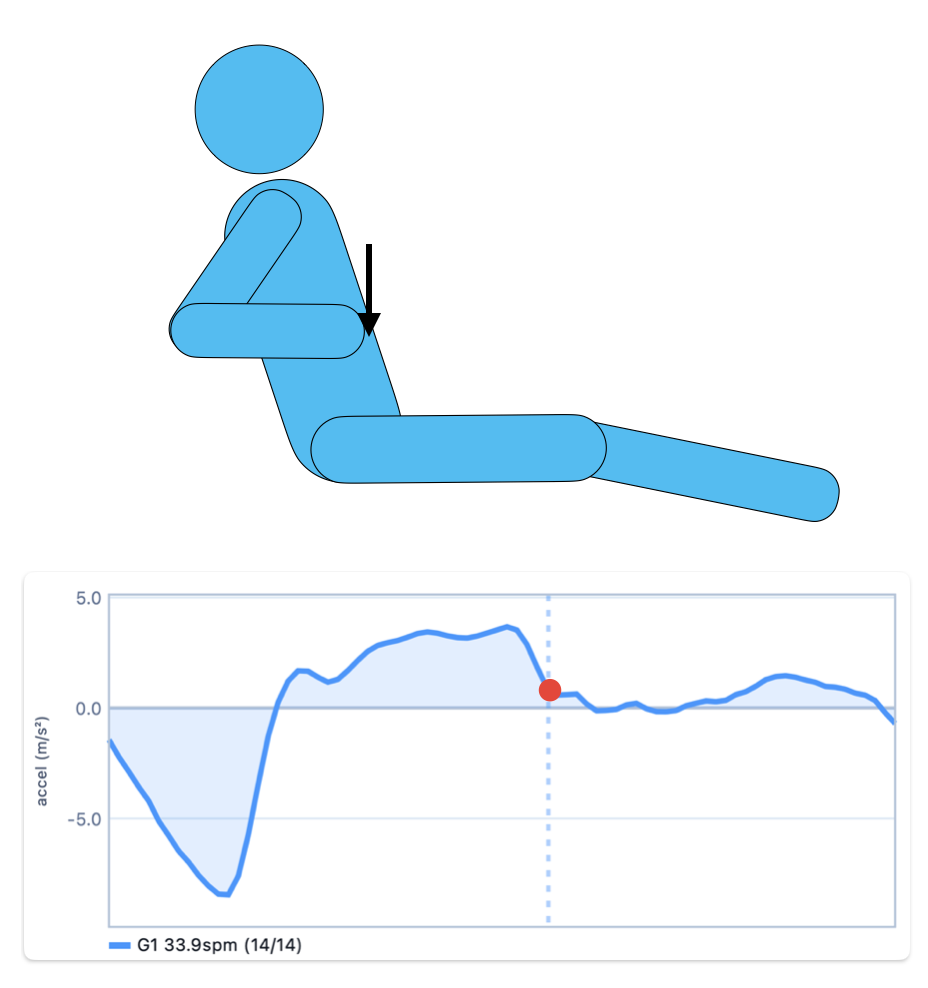
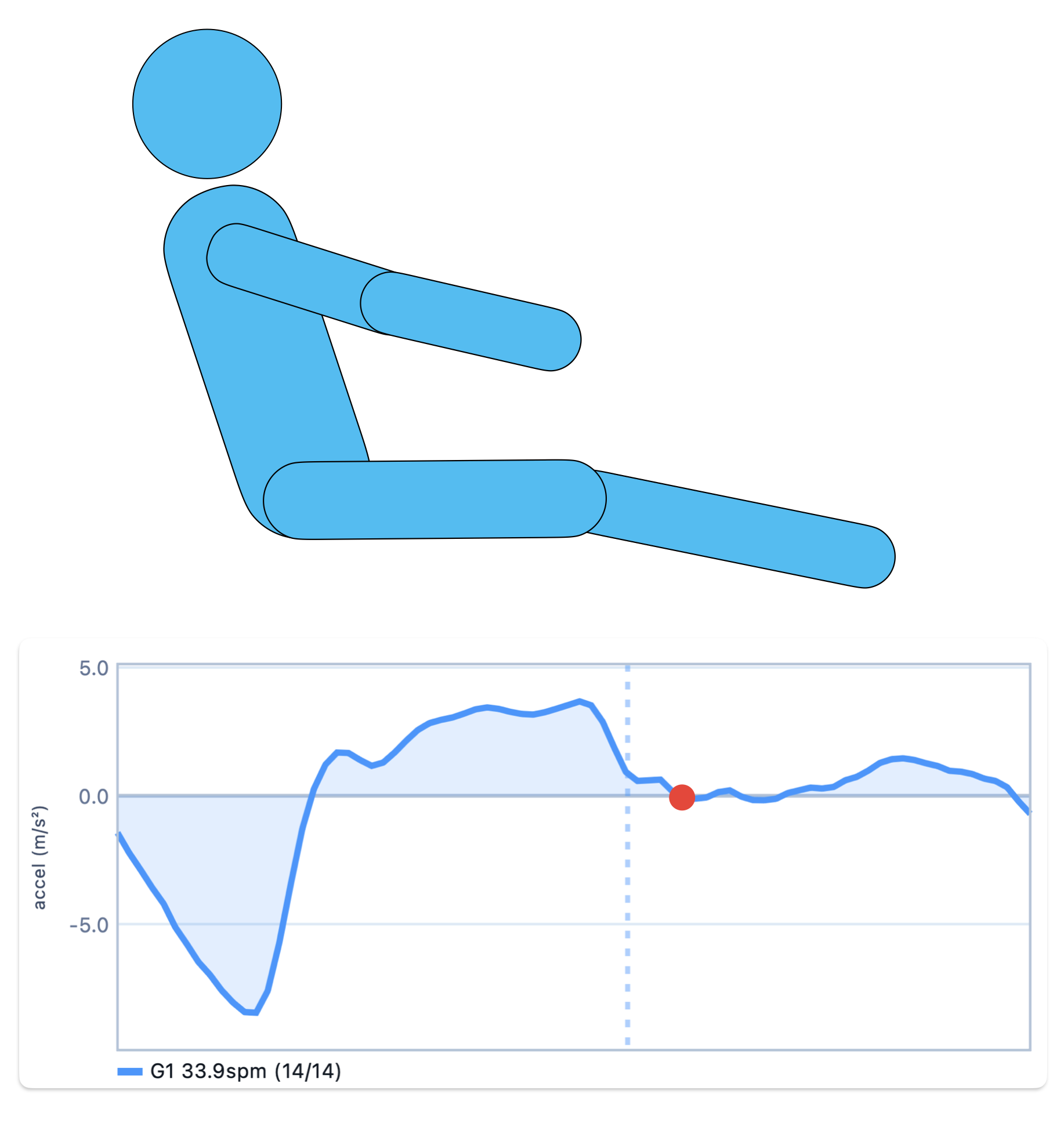
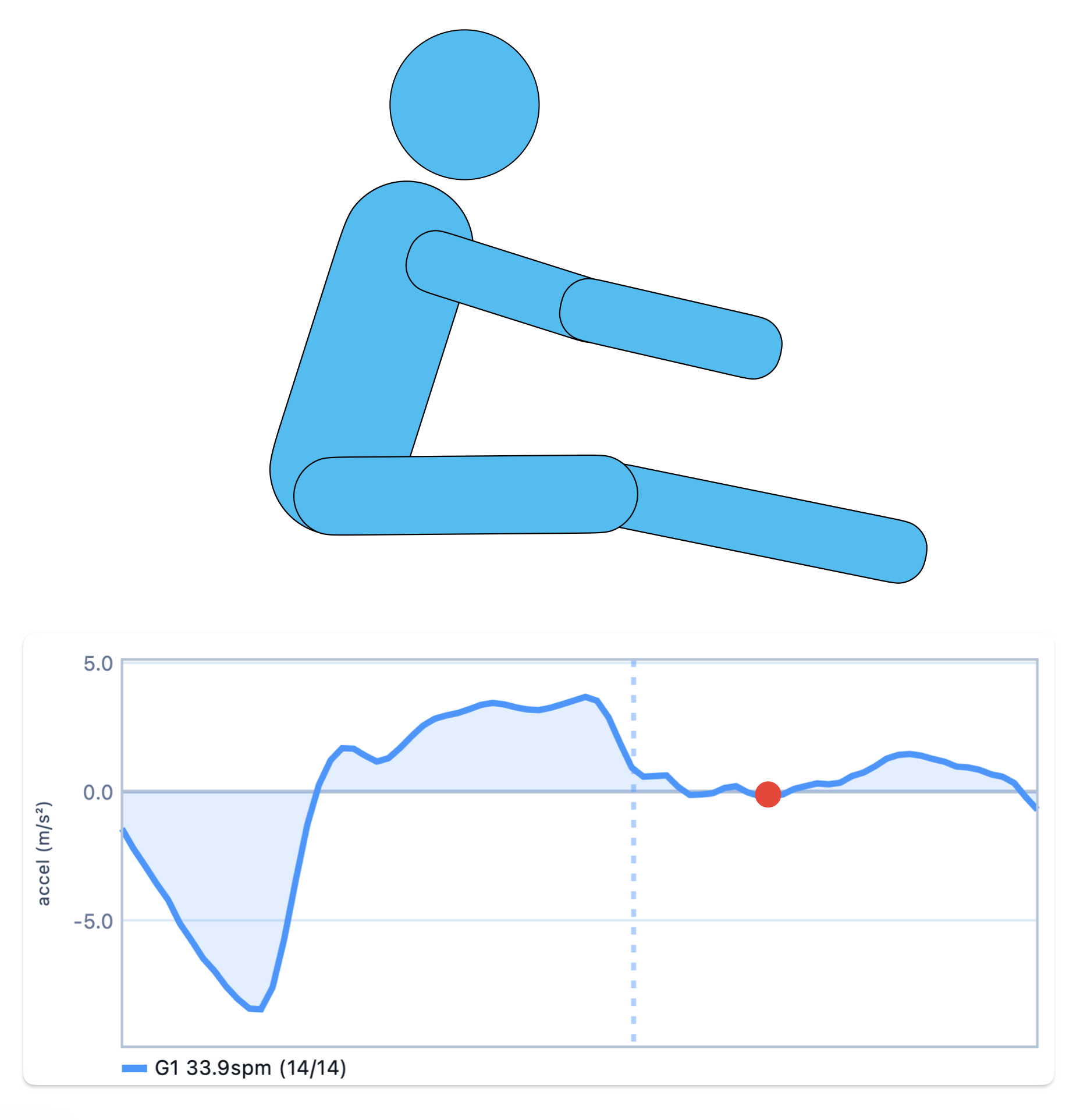
The pull into the catch should create positive acceleration during the recovery. In elite crews at race rates, this recovery acceleration is similar in size to drive acceleration. As the rower approaches front chocks, the oar should enter the water as the final part of the recovery. A short catch duration comes from timing the entry well, not from violently lifting the arms.
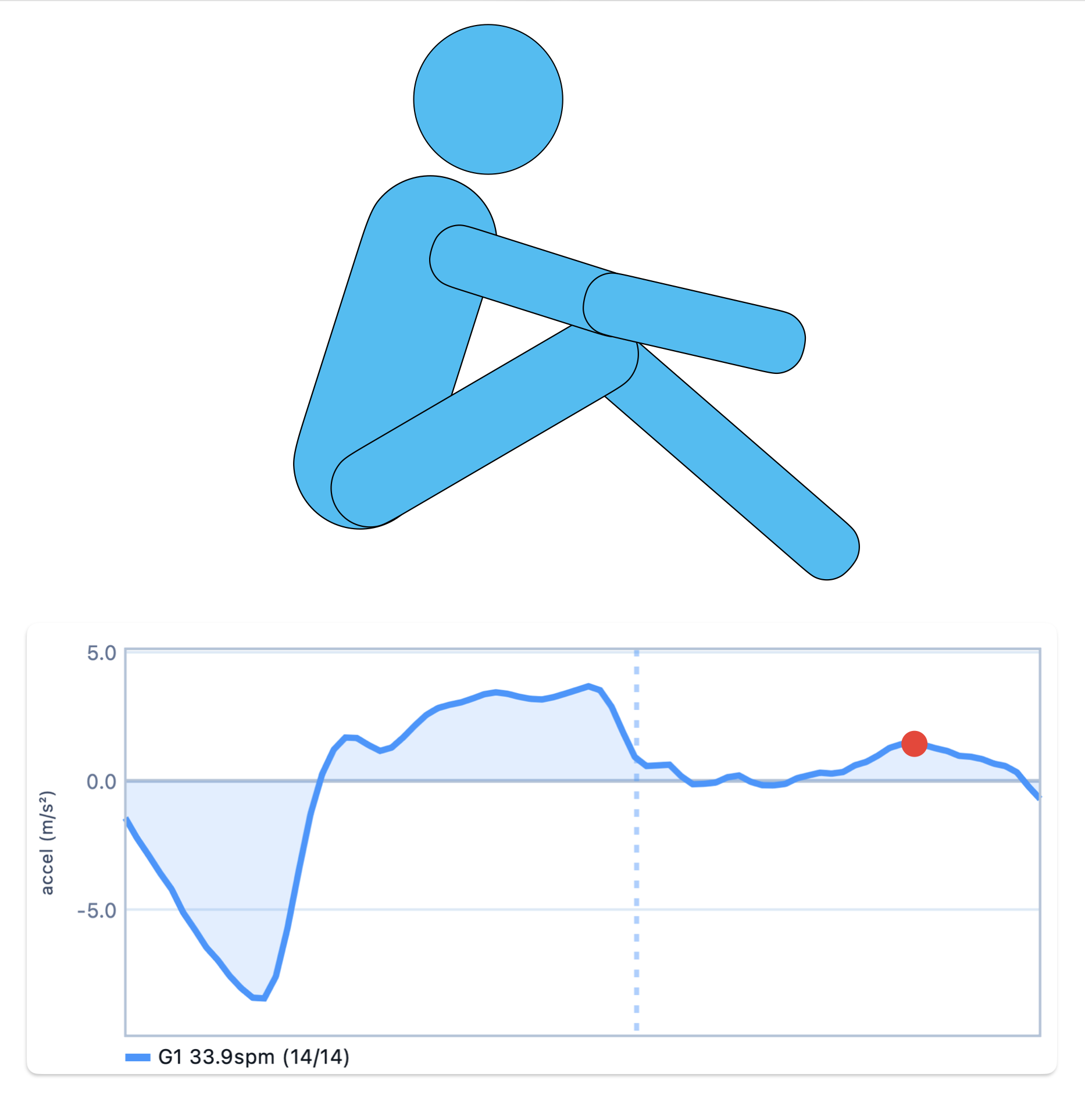
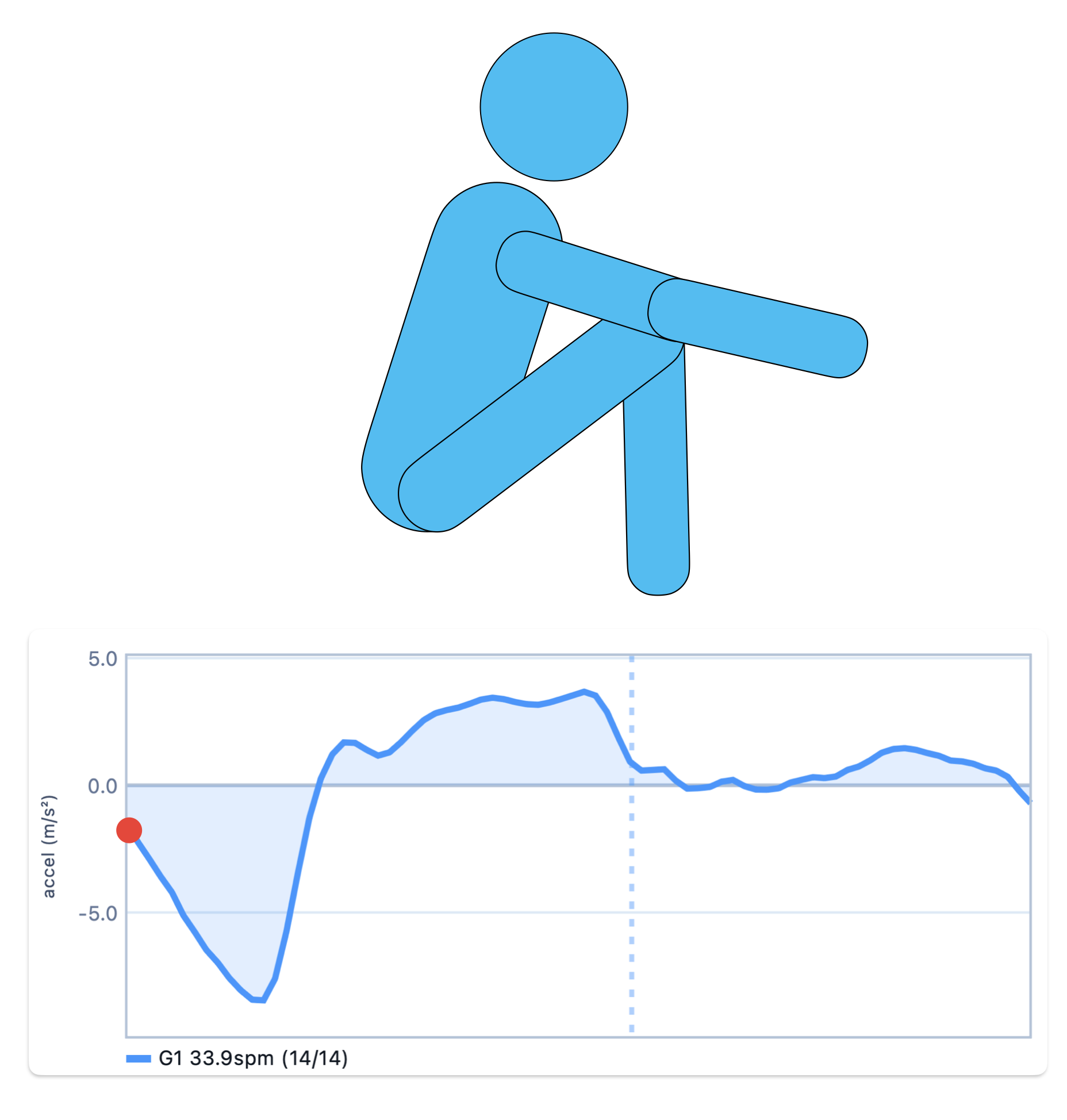
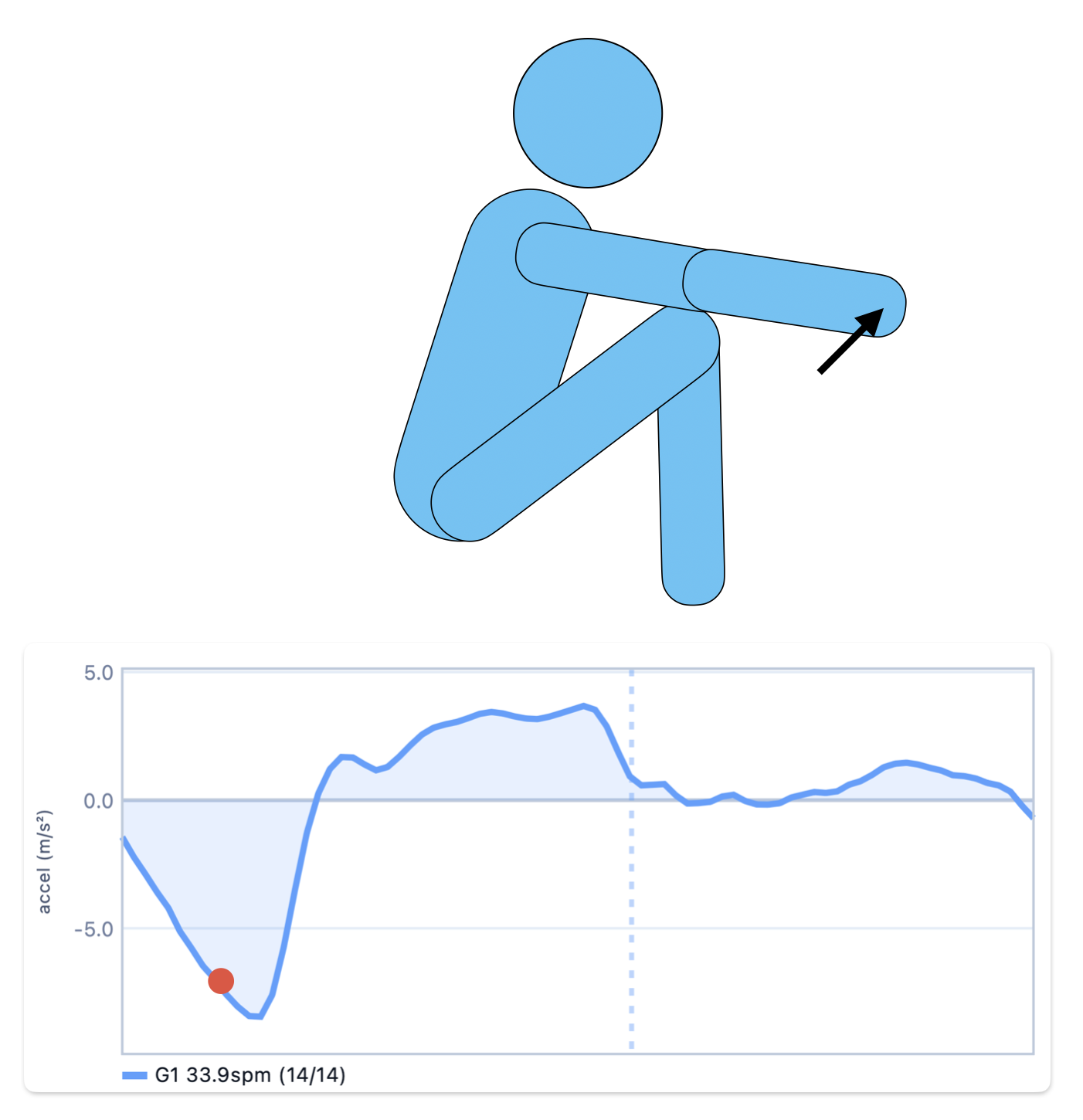
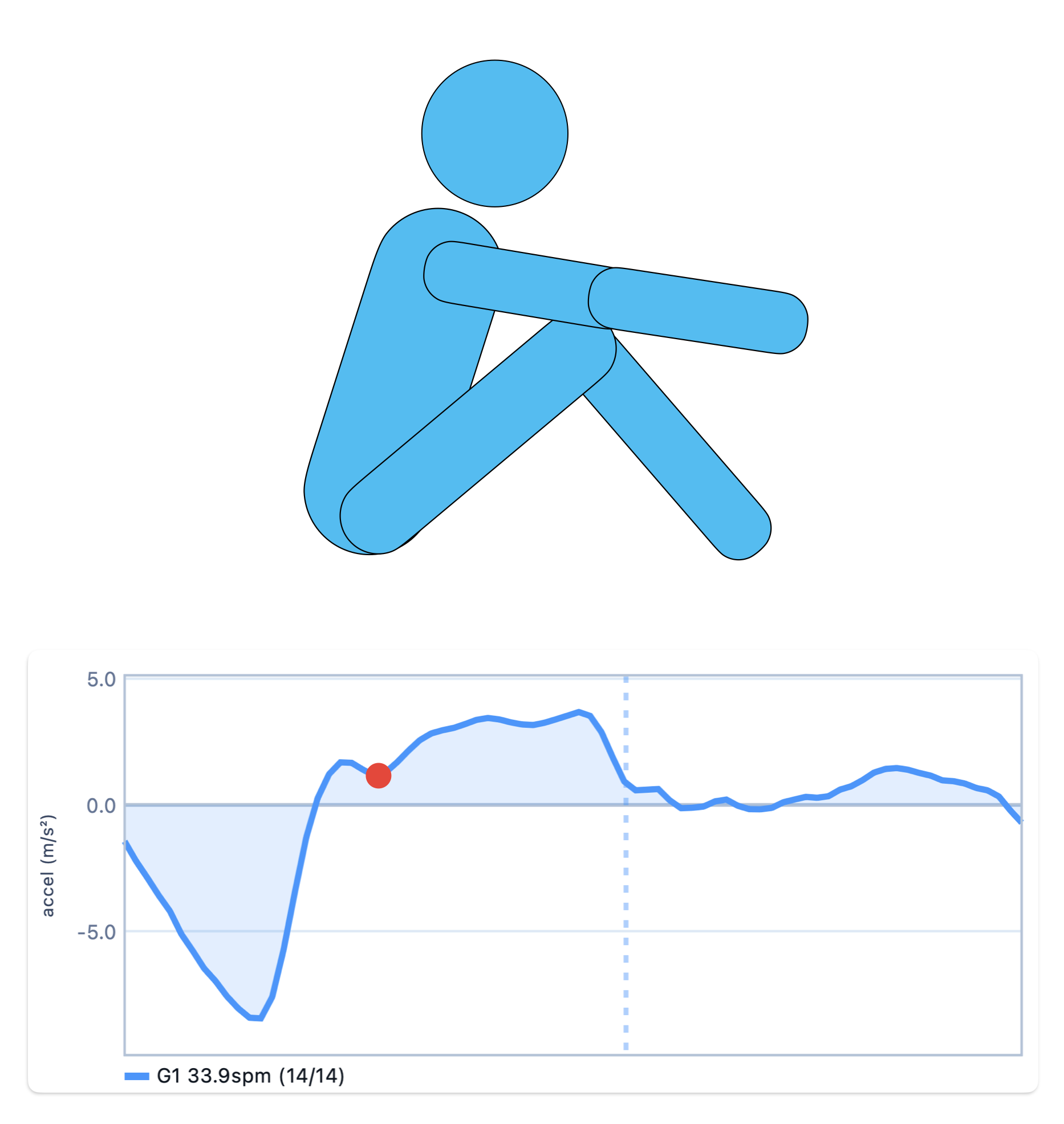
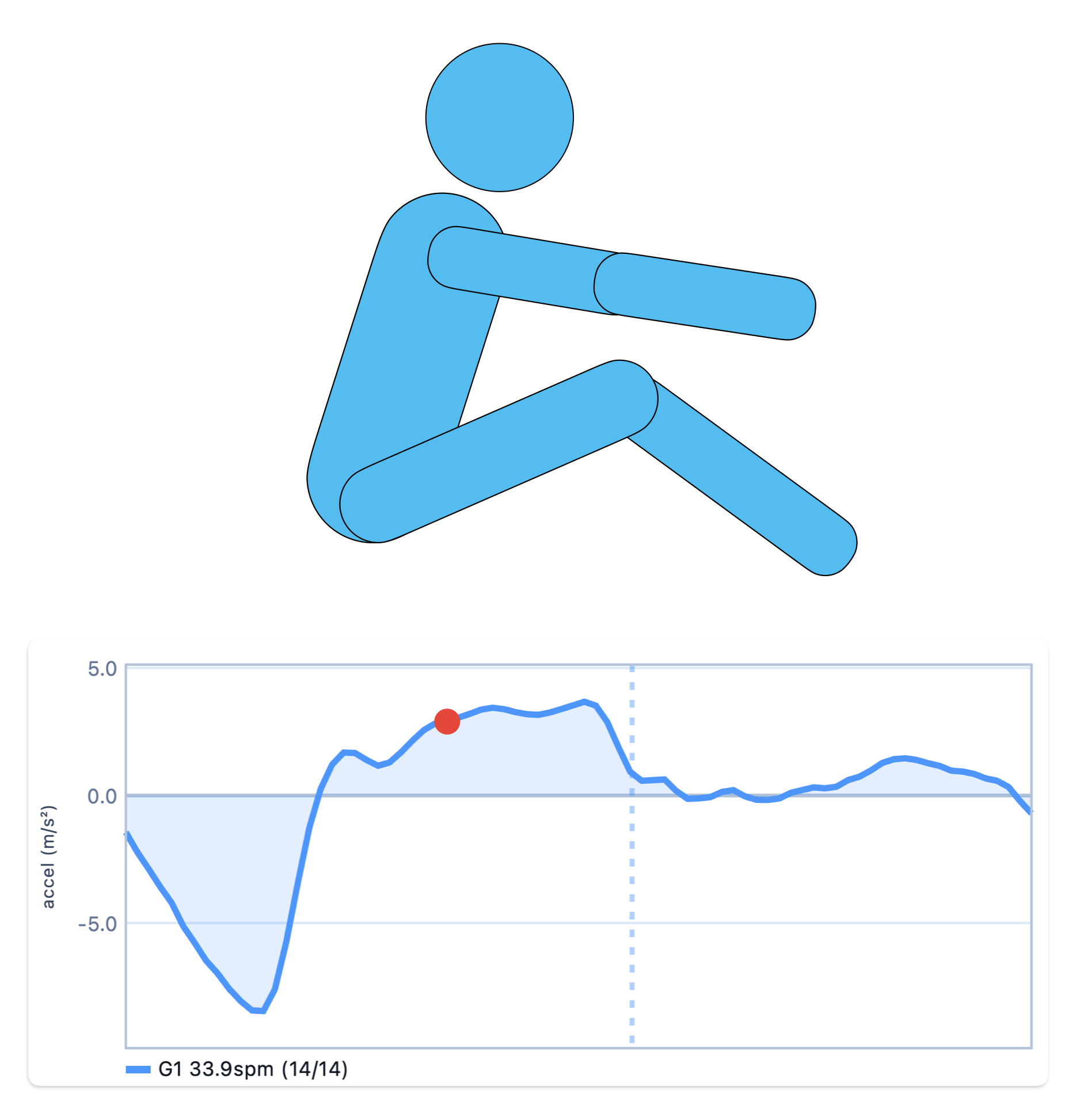
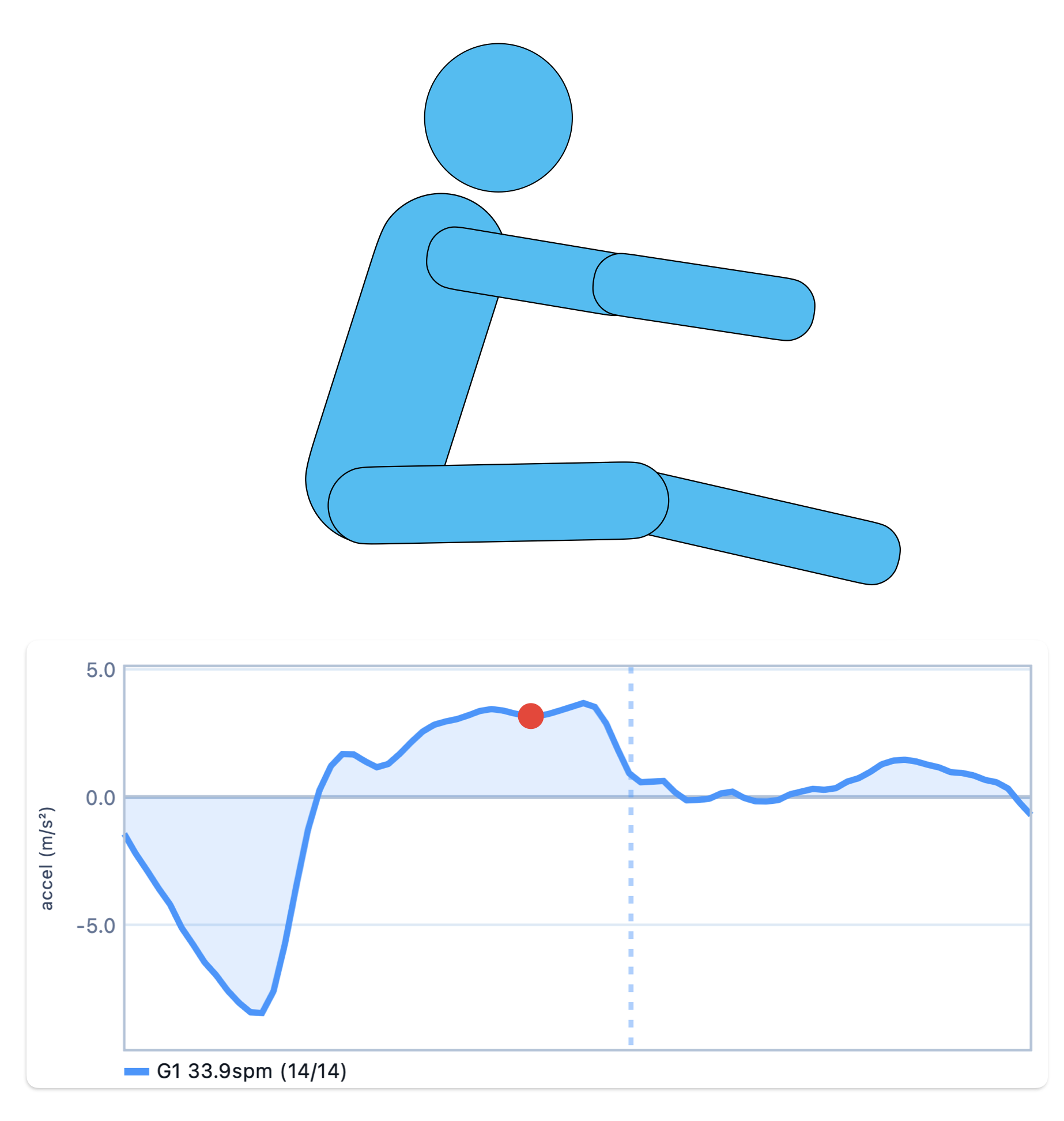
Once the oars are engaged, acceleration increases sharply. As the line crosses zero acceleration, the boat is going at its slowest speed. The first drive hump is a result of the bow wave re-forming on the hull, the bubble forming in front of the oar, the bend being absorbed by the oar and the strain being taken by your body. As you continue to drive with the legs, the boat continues to accelerate.
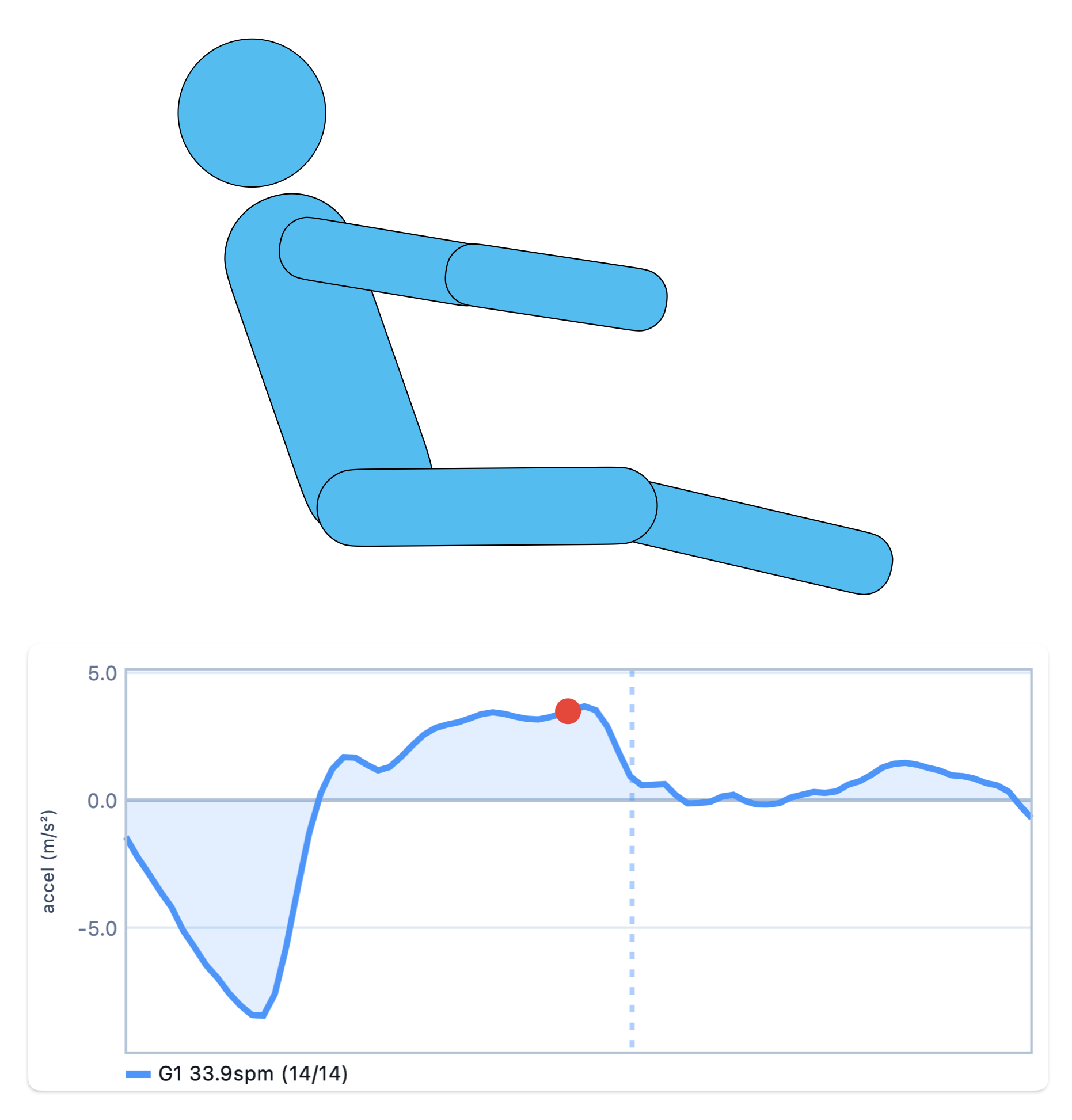
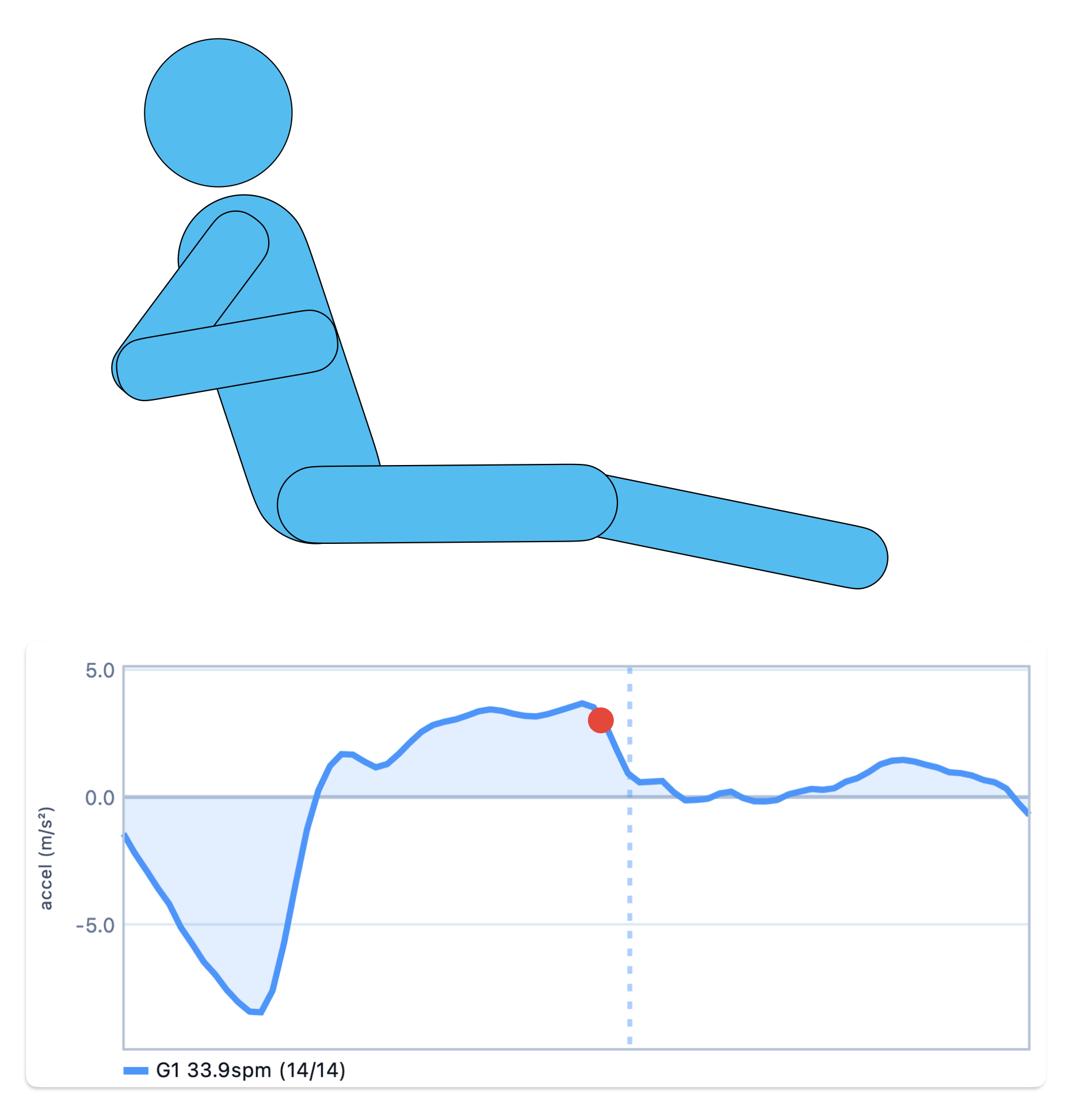
The body opening and arm pull should complete the drive phase. It is important to continue the oar speed to the finish to aid oar extraction. Keeping the body still at the finish helps maintain momentum in the direction you have worked to create. At race rates, elite small boat rowers produce drive acceleration above 5 m/s³.
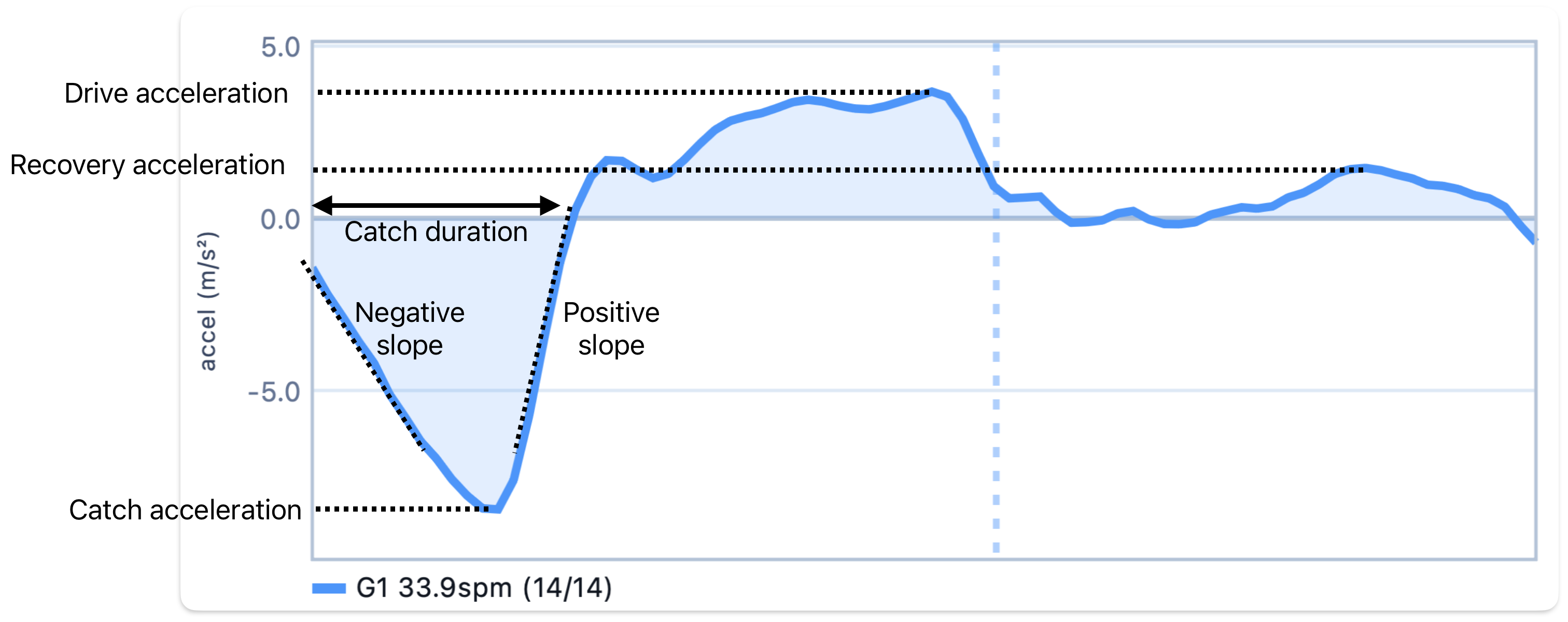
Catch duration is the time from the rapid deceleration in boat speed, as the body stops moving forward and the oars enter the water, until the blades are engaged and the boat begins accelerating again. The longer the catch duration, the longer the boat decelerates and the more speed is lost.
The greater the combined mass of the boat, crew, and coxswain, the longer it takes to re-accelerate. An elite single typically has a catch duration of about 300 ms, while an elite eight is closer to 400 ms at race rates. Catch duration decreases slightly as stroke rate increases.
At race rates, elite small boats typically reach a catch depth of about 10 m/s², roughly double the drive acceleration. A large depth shows that the athlete is able make a quick, engaged catch. In one study of elite rowers in small boats, the fastest athletes had the deepest catch acceleration.
BoatRun measures the negative slope and positive slope of the curve. Steeper slopes on both sides are desirable because they shorten catch duration. The positive catch slope is especially important because it shows how quickly the boat begins accelerating out of the catch.
At lower rates during steady state work, the pull into the catch is not as pronounced, the first drive hump is more of a reduction in angle, and the body and arm pull is not as pronounced — creating more of a smooth bubble shape than a table. Due to lower boat speed, the catch acceleration is not as strong.
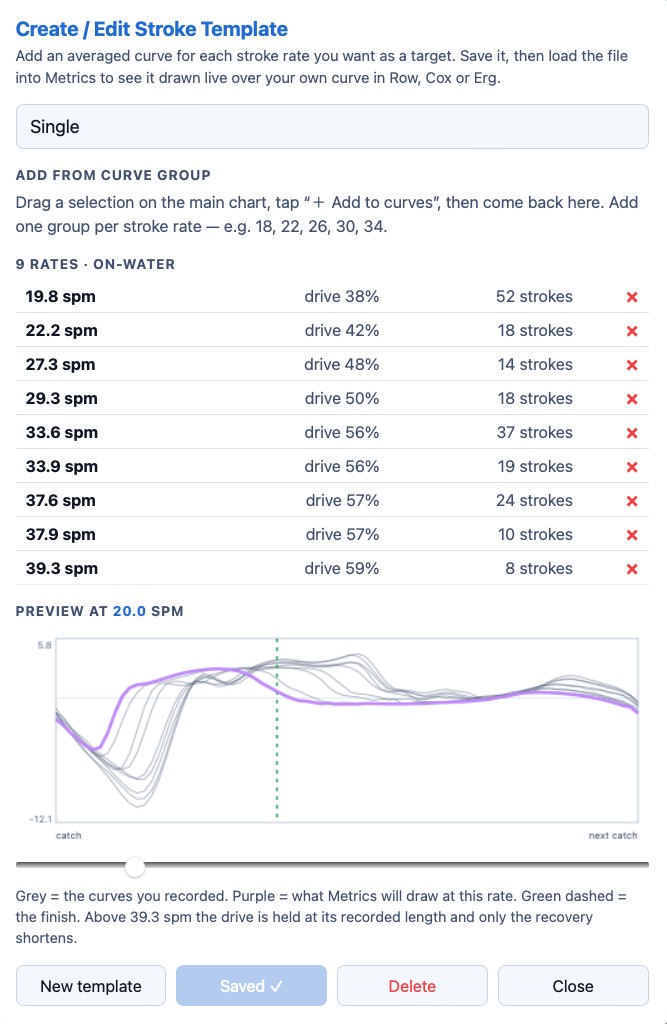
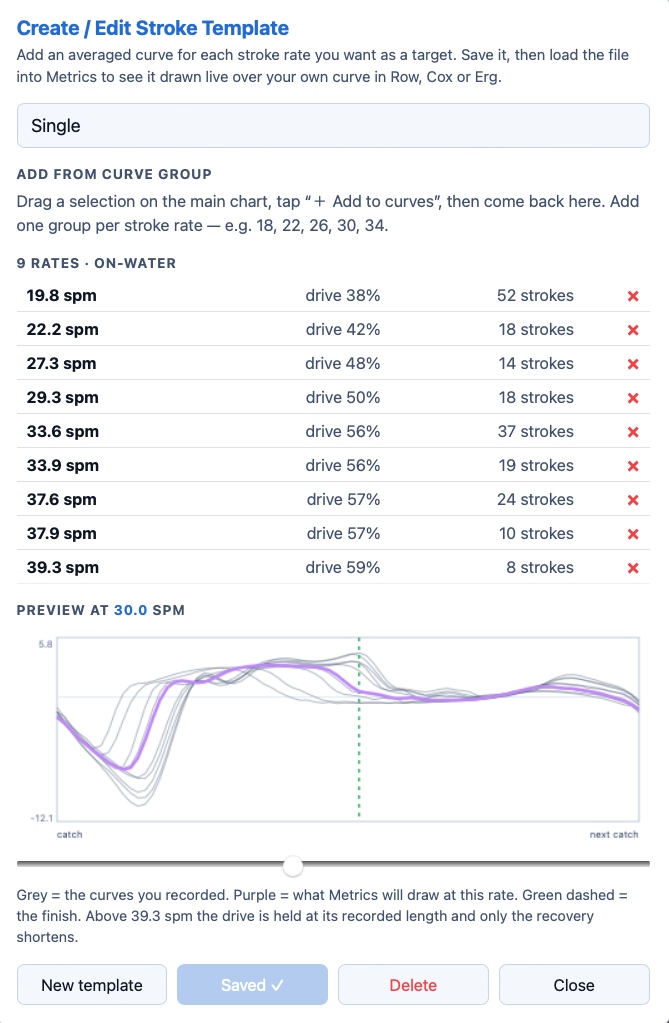
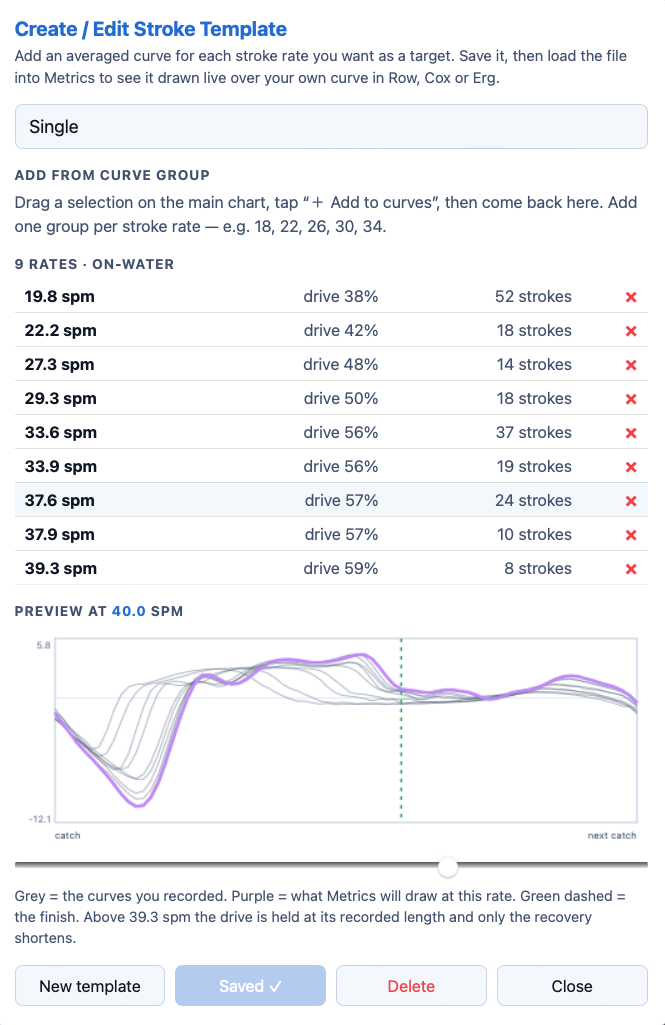
BoatRun will dynamically overlay a template on your stroke curve at any rate. In the template builder, strokes are all stretched or compresses to the same length on the chart. This can look like catch duration is longer at higher stroke rates but in this example it actually decreases from 350ms at 20spm to 310ms at 40spm.
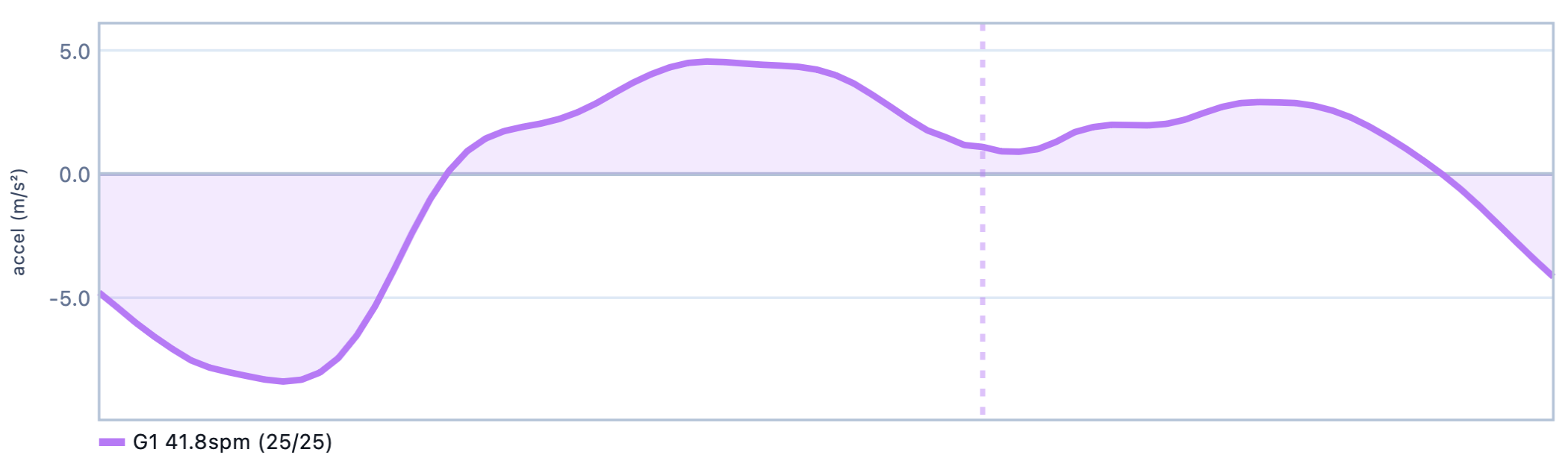
As mentioned previously, the catch duration will be slightly longer in a larger boat due to the momentum. The more people rowing the boat, the higher the likelihood of different technique and therefore micro decelerations. There will also be a corresponding decrease in catch acceleration depth. An elite mixed eight shown below at 42spm shows a 400ms catch duration, with a strong pull into the catch.
The feet are your lowest connection point to the boat. Sequencing the recovery well — arms away, then body over before breaking the knees — transfers weight from the seat to the footplate as early as possible. This helps balance the boat and creates a steadier platform into the catch.
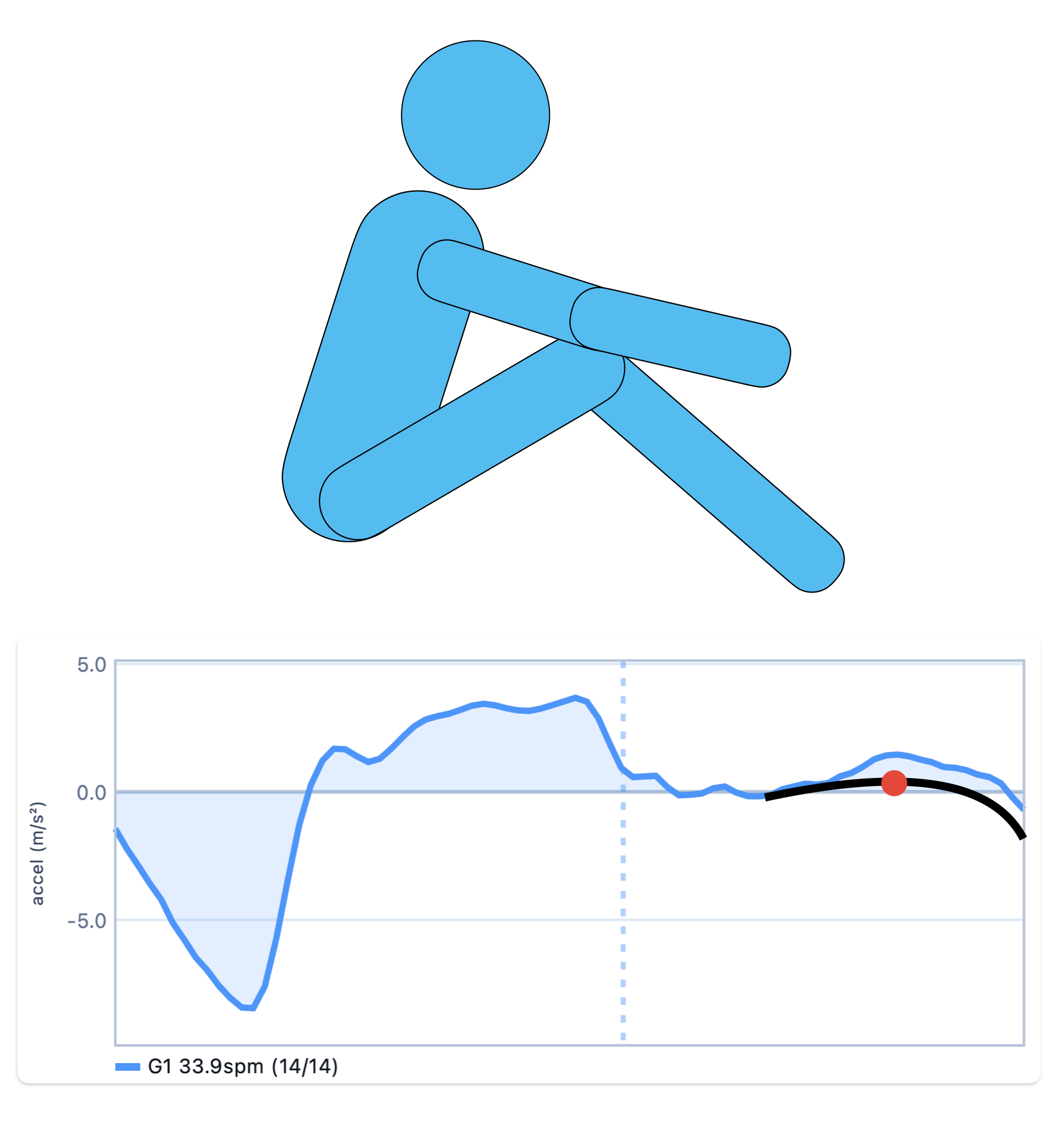
Usually as a result of erg training, athletes are used to drifting into the catch. Even the weight of a coxed four is significantly less than the weight of the athletes pulling the boat under them. Failing to pull the boat towards you results in an early drop in acceleration and a longer catch duration. To make the pull effective however, the catch timing needs to be correct or you risk generating excessive movement towards the stern without converting that energy into effective force.
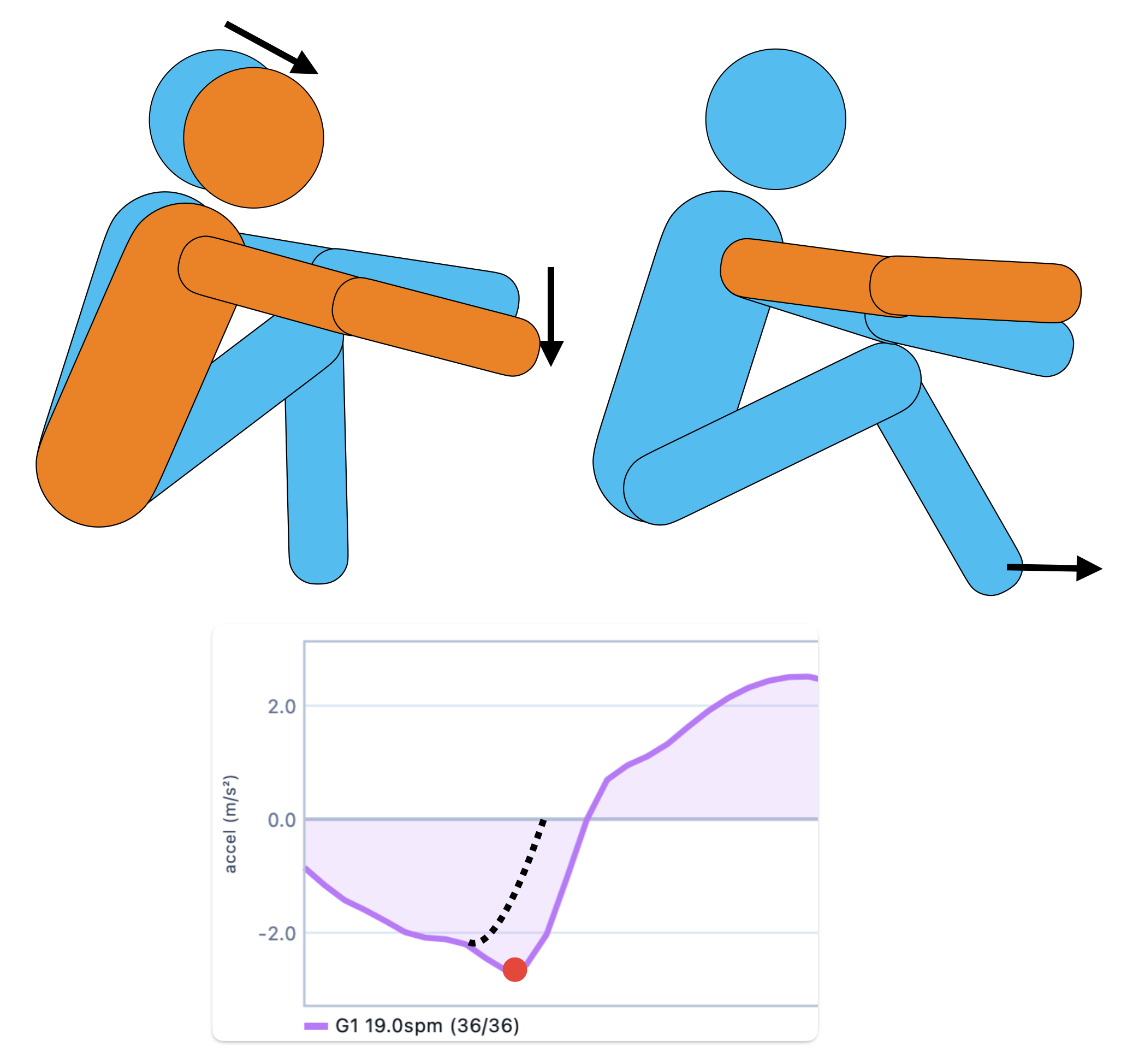
Both a lunge and a late catch, or "rowing it in," create a double bump in the stroke curve. This delays the catch and increases the time spent decelerating.
A lunge adds deceleration because the body moves farther toward the stern than necessary and then stops late. It also pushes the stern downward, increasing drag. As the body moves forward, the arms tend to follow downward, which can cause the oars to sky at the catch and delay the time to oar engagement. Inflexible rowers are more likely to lunge as they can rock over more once the hamstrings are no longer under tension. It's essential to keep the same body angle throughout the recovery and drive.
Rowing it in creates a similar effect. If you push against the footplate before the oar is in the water or fully engaged, you push the lighter boat away from you and create a second negative acceleration until the oars grab and the boat accelerates in the correct direction. By this time, all that leg drive has been wasted pushing the boat the wrong way, leaving less leg extension remaining to drive correctly.
Rowing the oar in and skying the oar both delay the time to oar entry. Athletes will often compensate by "rushing the slide" to arrive earlier at the catch. Rushing the slide is a symptom of a lunge and/or rowing it in. Once the catch is corrected, the athlete no longer feels the need to rush forward.
The most common drive error is poor sequencing. Opening the back too early produces high power at the start of the drive but leaves little power for the later stages because the body opening has already occurred. The result is a front-heavy curve that tapers early toward the release. Opposite to the lunge at the catch, the arms raise as the body opens, driving the oars deep. Since the acceleration drops off towards the end of the drive and the oars are deep, oar extraction and balance are often compromised. Incorrect erg training often exacerbates this issue due to opening the body early under fatigue with not adverse effects.
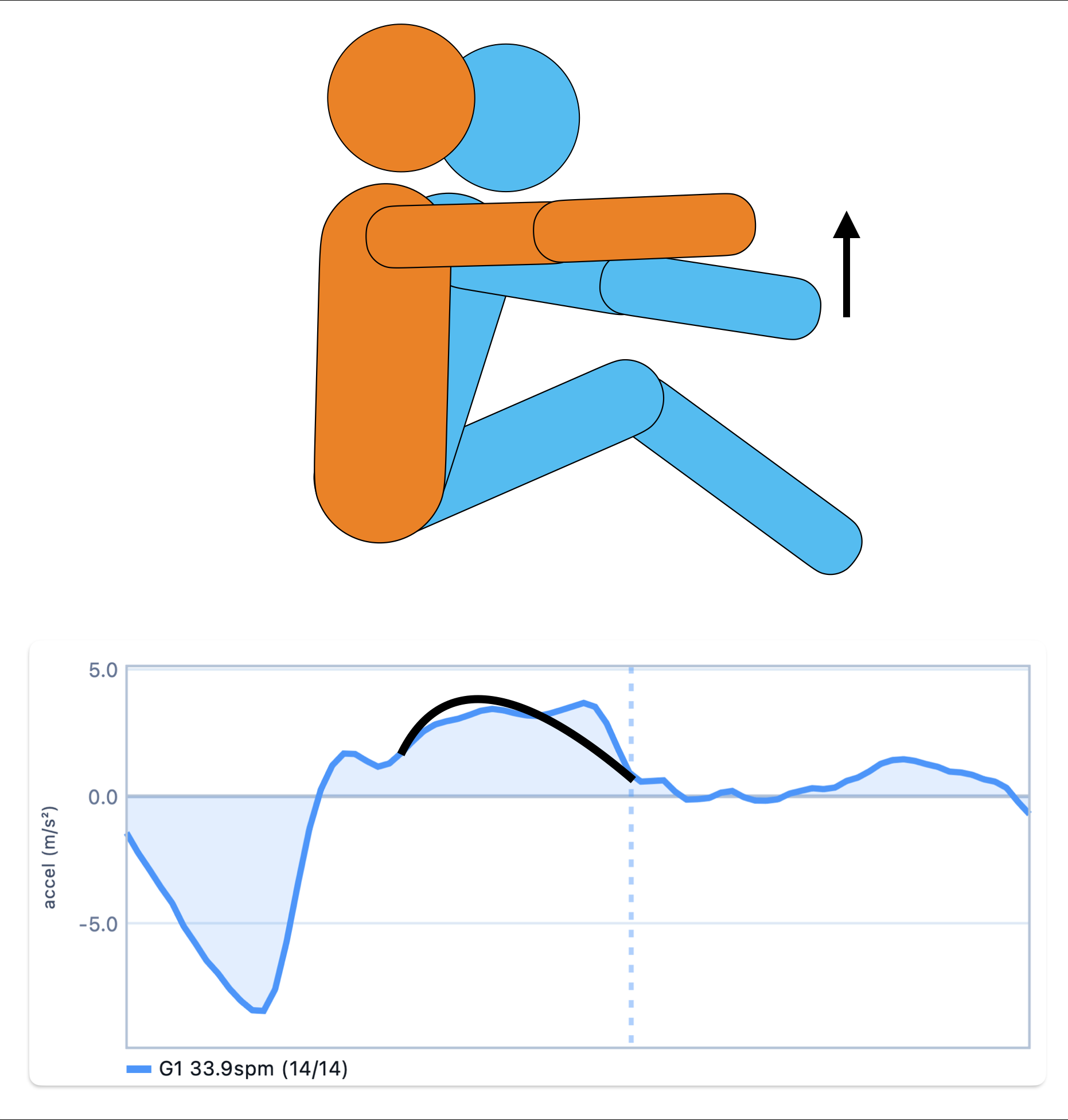
Deep oars usually have two main causes: opening the back too early, and rowing the catch in.
As noted above, opening the back raises the arms and buries the oars.
The second, often overlooked cause is rowing the oar in. Rowing the oar in, the oar initially has little resistance, so the athlete may open their back to create power and "feel" the oar. This raises the arms and buries the blade.
A deeply buried oar creates extra drag on the system and is more difficult to extract cleanly.
Washing out the oars occurs when the hands drop in the late part of the stroke. This is generally caused by not maintaining posture at the finish or getting too much layback. The excessive layback is often from opening the body too early in the stroke and then still wanting to get more body opening at the finish.
It is also much more difficult to recover posture during the recovery from a slump, generally resulting in sloppy oar control during the recovery.